






Table of Contents
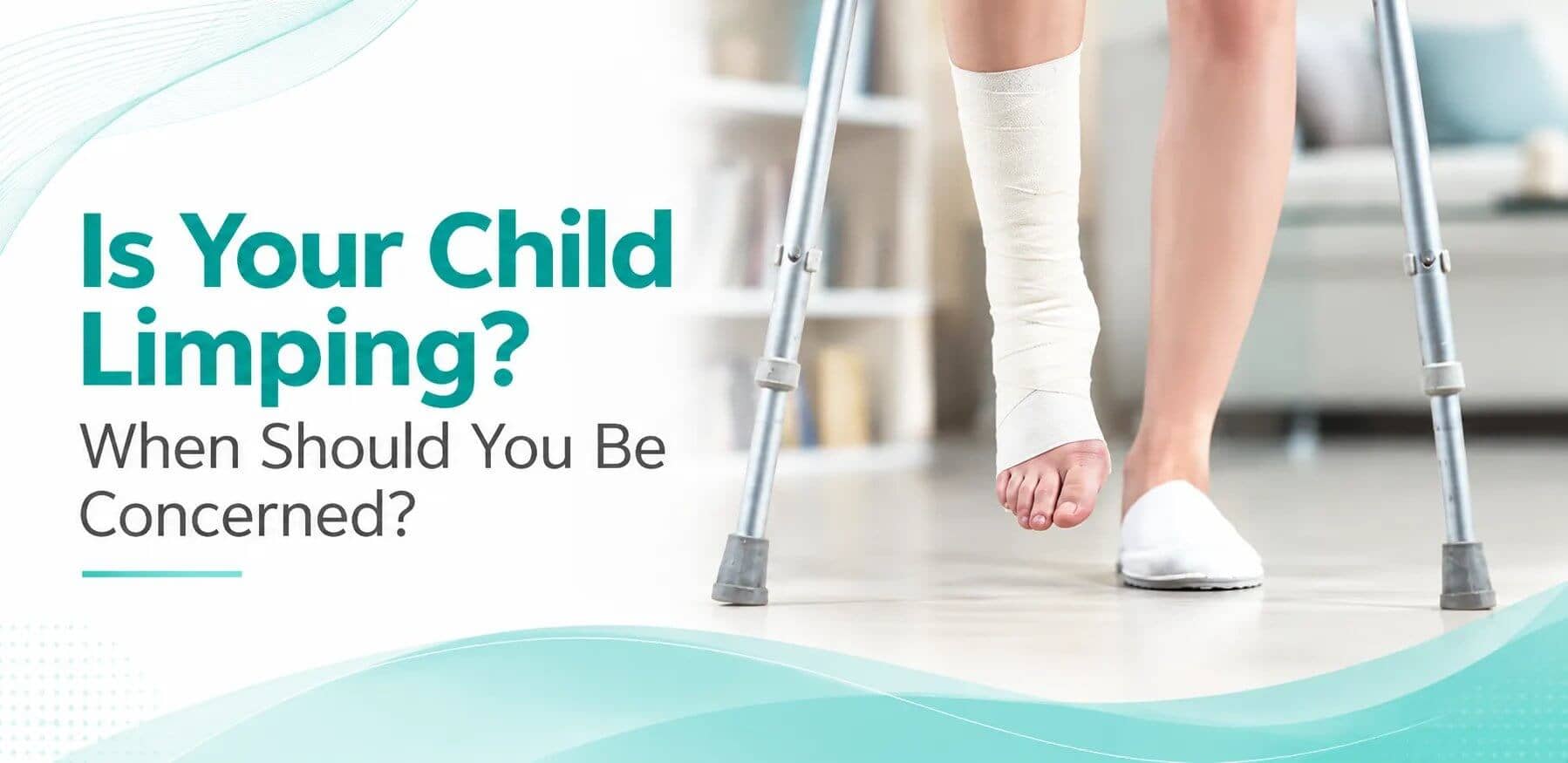
A limp is not a condition itself but a sign that something may be affecting the way a person walks. Although limping can occur at any age, it deserves particular attention in children, as they may be unable to clearly describe pain or discomfort. Identifying the underlying cause early is essential for selecting the most appropriate treatment and preventing long-term complications.
Common Signs of Limping in Children
Children who limp may avoid putting weight on one leg, walk unevenly, trip more frequently, or appear to favor one side while walking or running. Some may complain of pain in the foot, ankle, knee, hip, or lower back, while others may show no obvious pain at all. In these cases, parents are often the first to notice subtle changes in their child’s walking pattern. Uneven shoe wear—particularly around the heel—may also provide an early clue that gait mechanics are abnormal.
What Causes a Limp?
Limping can result from a wide range of conditions affecting the musculoskeletal or nervous system. Common causes include injuries, inflammation, hip or knee disorders, muscle weakness, leg length discrepancy, neurological conditions, and structural foot abnormalities. Because each condition alters walking in a different way, a detailed gait assessment can provide valuable information to help clinicians determine the underlying cause and develop an individualized treatment plan.
Can Flat Feet Cause Limping?
One frequently overlooked cause of limping is flatfoot (pes planus). When the medial arch of the foot collapses, the foot becomes less efficient at absorbing and transferring forces during walking. This altered foot mechanics may contribute to excessive foot pronation, reduced walking efficiency, ankle instability, recurrent ankle sprains, and pain extending to the feet, knees, hips, or lower back. In some individuals, these biomechanical changes may also contribute to an abnormal gait pattern.
How Can Custom Foot Orthoses Help?
Treatment depends entirely on the underlying cause. Depending on the diagnosis, management may include medical treatment, physical therapy, exercise programs, or, in selected cases, surgery. For patients whose limping is related to abnormal foot biomechanics, custom-made foot orthoses offer a conservative, non-surgical treatment option. Individually designed orthoses help support the foot, improve lower-limb alignment, optimize load distribution, and promote more efficient movement during walking. When a limp is associated with a leg length discrepancy, customized shoe lifts or orthotic modifications may also be incorporated to improve limb symmetry and reduce compensatory gait patterns.
At PBS Orthotics Clinic, every treatment begins with understanding why the patient is limping—not simply treating the symptom. Our assessment combines clinical examination with gait and biomechanical analysis to identify the factors contributing to abnormal walking. Based on these findings, our orthotists design personalized orthotic solutions that support more efficient movement, improve stability, and help patients return to everyday activities with greater confidence.
If you continue to experience persistent foot pain despite trying all natural treatment methods, consult a specialist promptly. At PBS, our team of foot care specialists provides services including custom orthotic insoles for plantar fasciitis and corrective devices for foot alignment. These solutions are personalized to treat the root cause and deliver the best possible outcomes.
Facebook: PBSofficial.TH
Line Official: @pbs.official
Source:
- https://www.aafp.org/afp/2023/0500/evaluating-child-with-limp
- https://www.nhs.uk/conditions/flat-feet/
- https://www.ncbi.nlm.nih.gov/books/NBK430802/
Interested in insoles for flat feet or seeking professional advice on foot deformities, foot alignment, or office syndrome? Contact our experienced foot care specialists at: