






Product: Posture-Correcting Insoles for Flat Feet
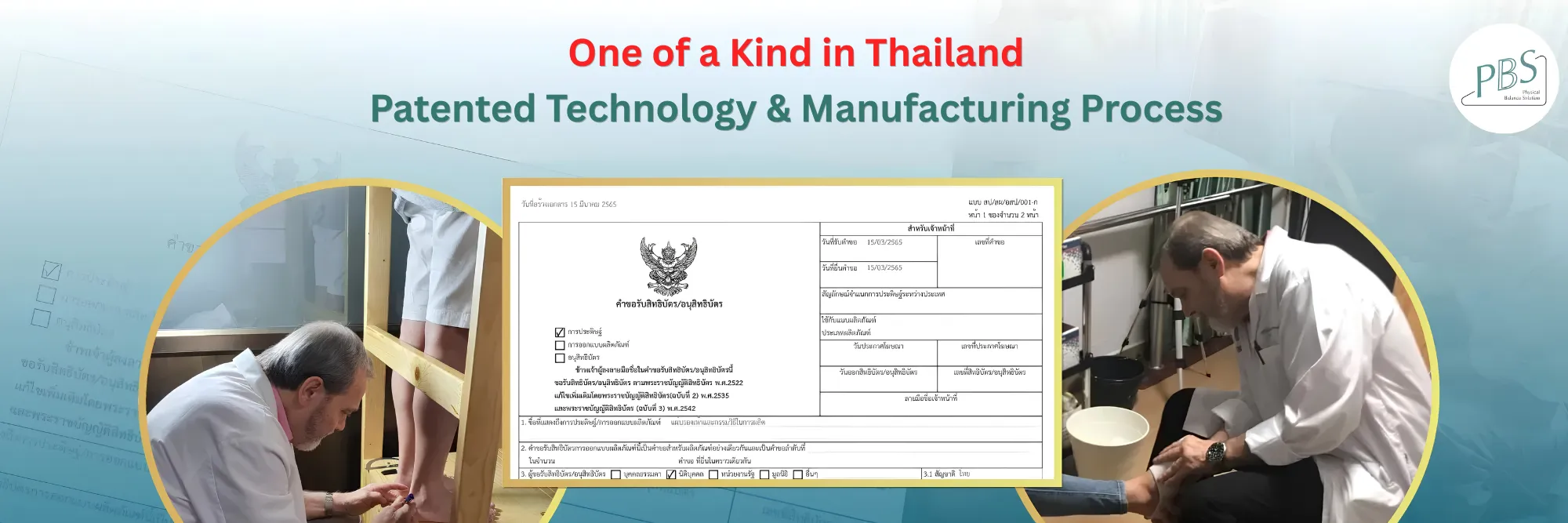


Our services
License No. 10109005366, PBS Orthotics Clinic

1.
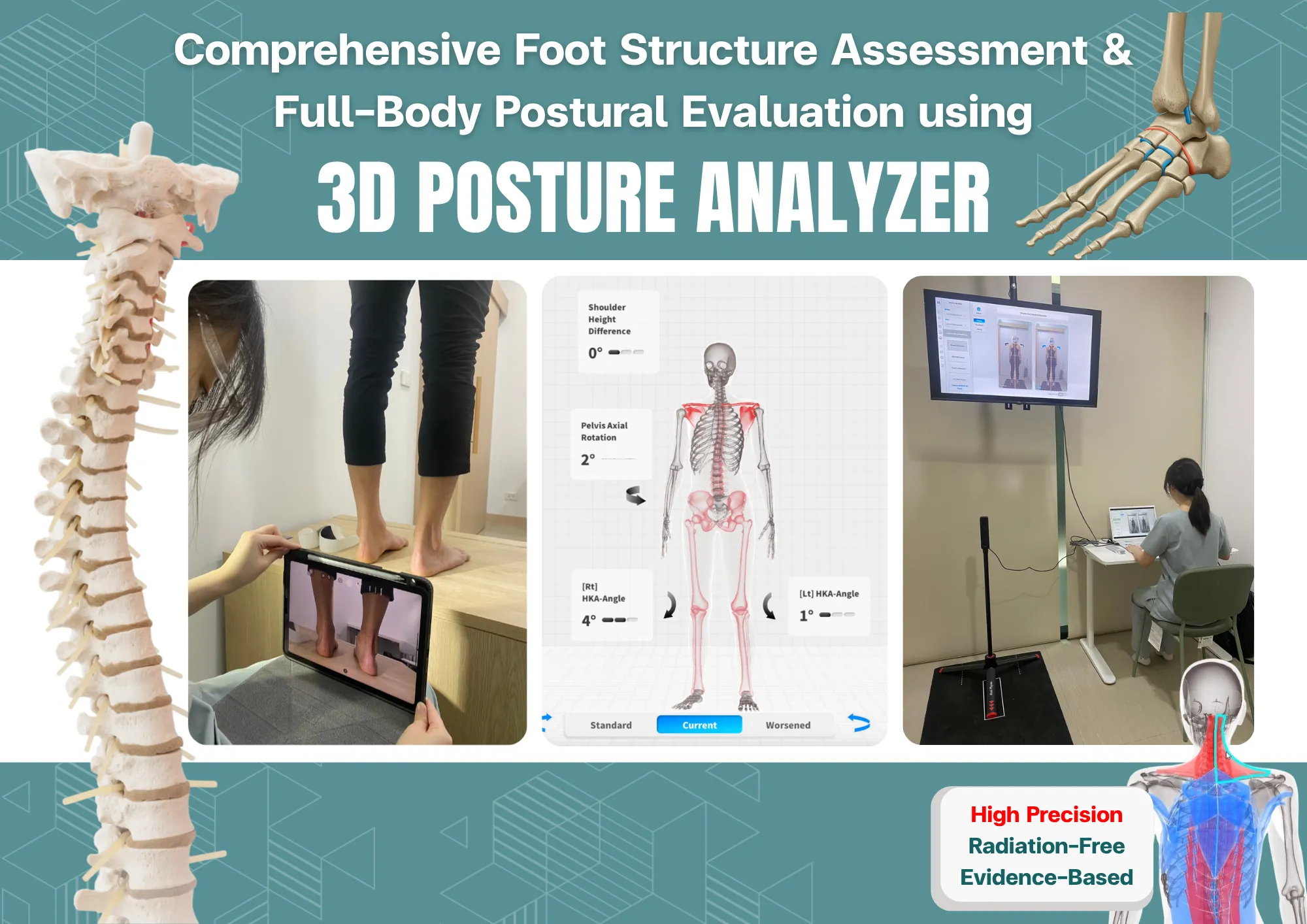
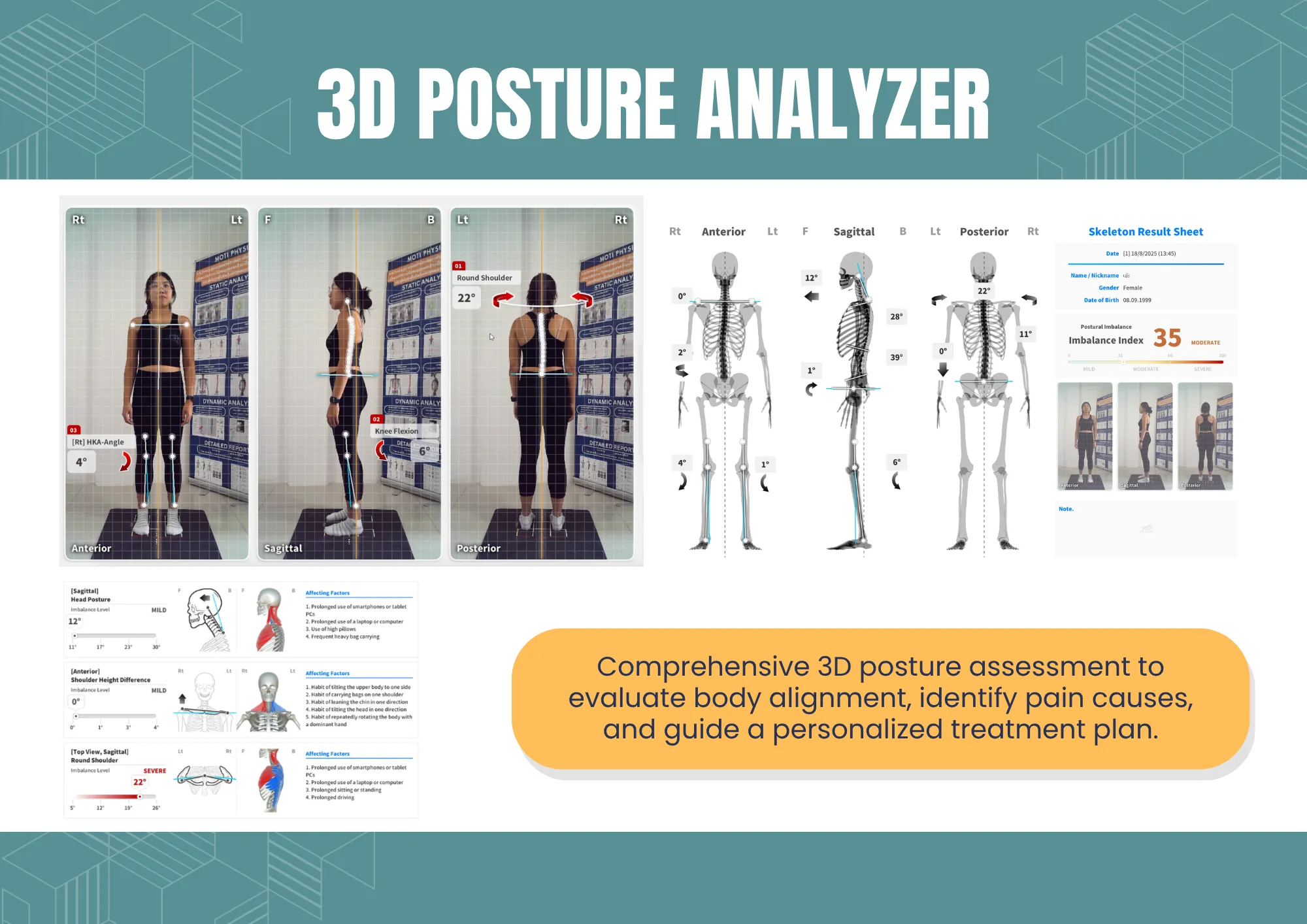
3D posture assessment to identify body alignment and biomechanical imbalances.
2.
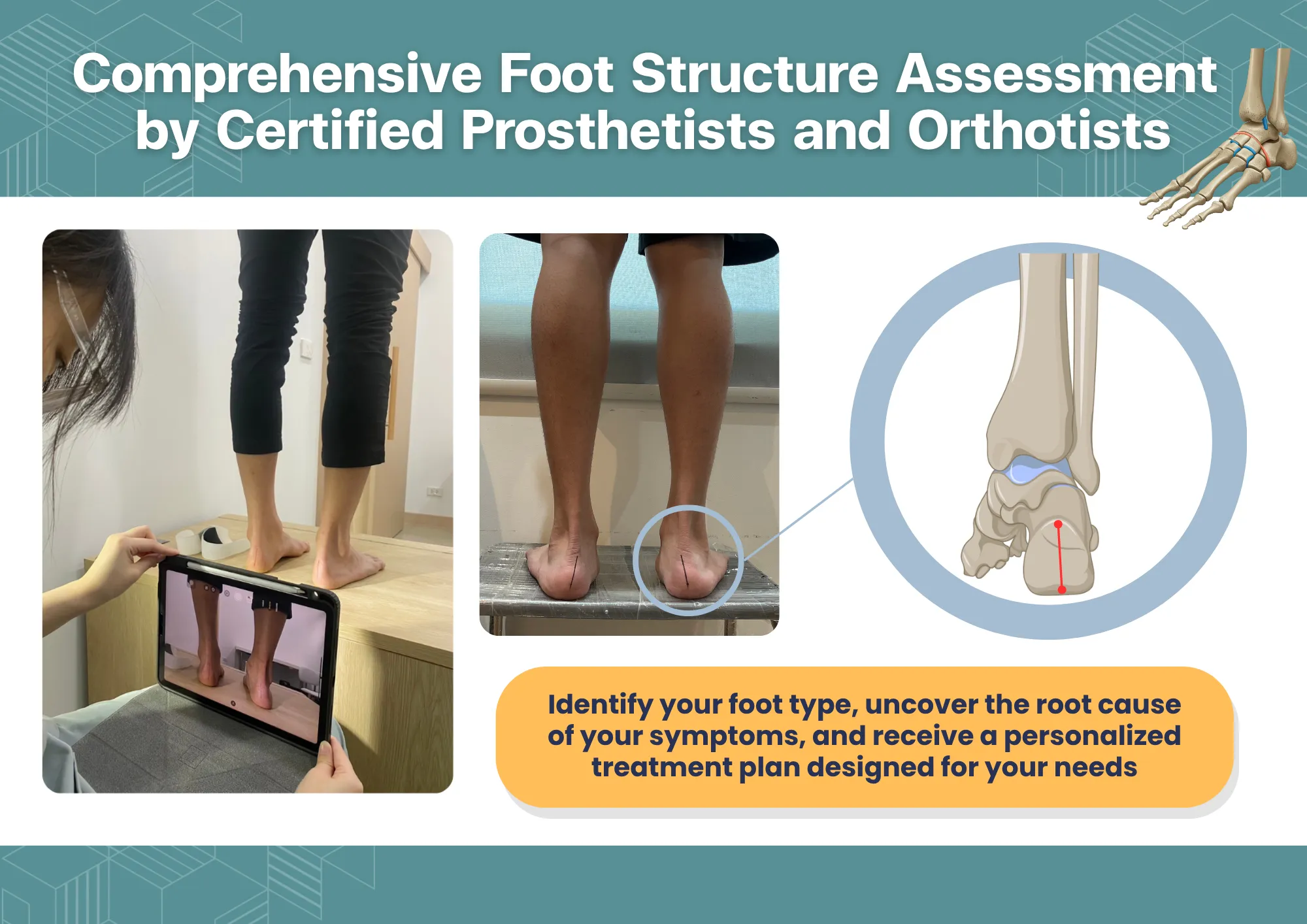
Foot assessment by a certified prosthetist and orthotist.
3.
Personalized treatment planning for each inividual to ensure the most effective care and optimal outcomes.
4.
Custom-made orthotic insoles designed to improve foot biomechanics, body alignment, and weight distribution.
5.
Evaluate the results immediately after wearing using a 3D posture analyzer.



Treatment procedure
1.
Consult about any pain or concerns, including foot pain, back pain, gait abnormalities, or posture-related issues.
2.
Advanced 3D posture assessment to identify imbalances and support personalized treatment.
3.
A foot mold is taken to create custom-made orthotic insoles. Production takes approximately 2 weeks.
4.
The orthotic insoles are fitted and adjusted, with immediate assessment after wearing.
5.
Follow-up evaluations are conducted every 6 months after the orthotic insoles have been used continuously.
Medical check-up services
PBS assessment service evaluates foot structure, knee alignment, standing posture, and gait patterns to identify the root cause of pain.
The evaluation is conducted by a certified prosthetist and orthotist, supported by a 3D Posture Analysis system to assess weight distribution and alignment of the knees, hips, and spine as an interconnected system.
Based on the results, personalized solutions are provided, such as custom orthotic insoles and tailored care recommendations for each individual.
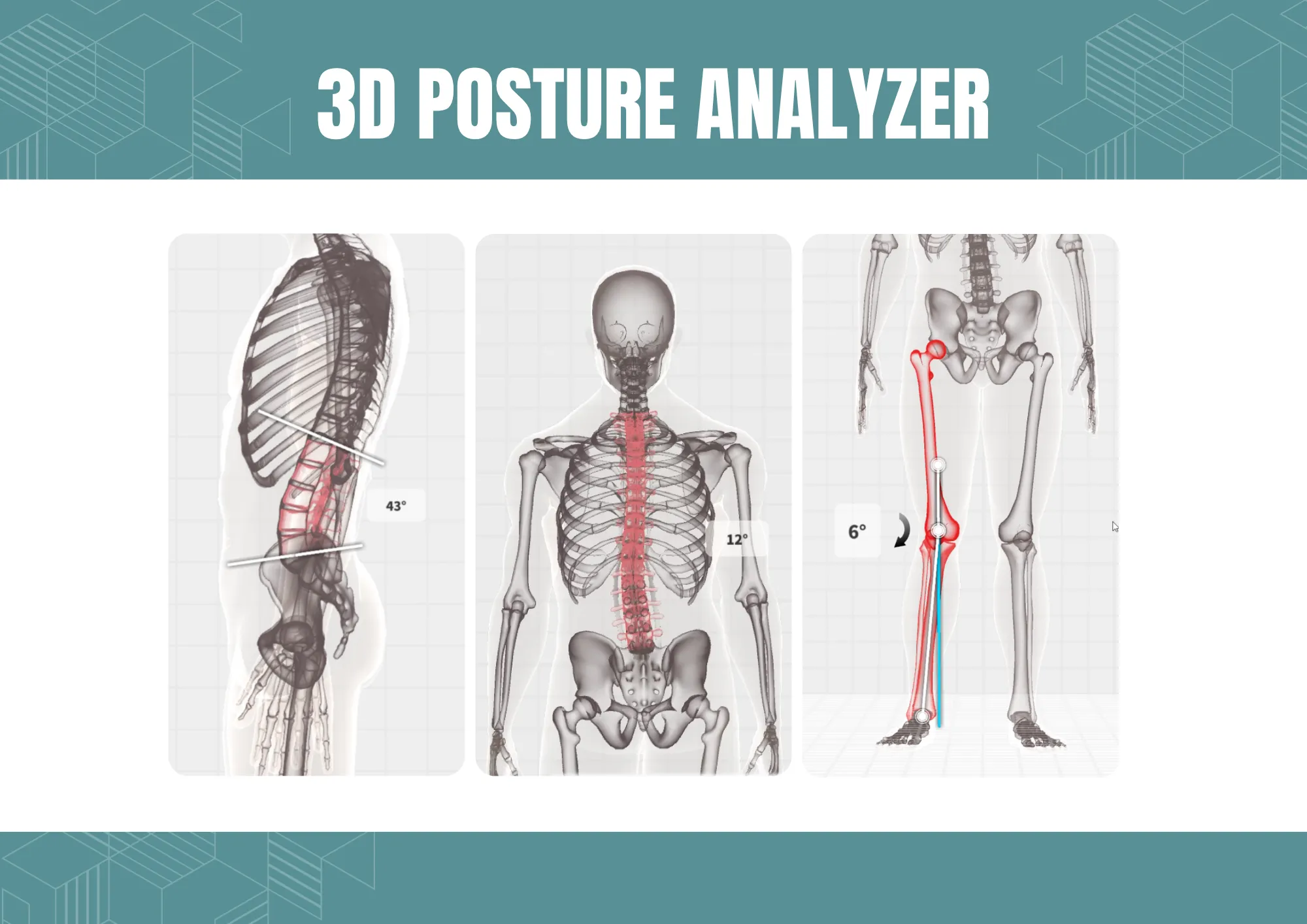
What the patient will receive.


William Neumann, CPO
ผู้เชี่ยวชาญด้านกายอุปกรณ์แผ่นรองเท้า เท้าแบน ตั้งแต่ช่วงต้น 1970 หลังจากสำเร็จการศึกษาหลักสูตรวิชากาย (Orthotic Education Program) ครั้งที่ 3 จากมหาวิทยาลัยนอร์ทเวสเทิร์น
ได้รับการรับรองว่าเป็น Prosthetist-Orthotist (CPO) ที่ผ่านการรับรองโดย American Board for Certification นอกจากนี้ ยังได้รับหนังสือรับรองจาก USA Veterans Administration ในตำแหน่ง VA-Qualified Prosthetist (VAQP)
อยู่ในการปฏิบัติงานทางคลินิกด้าน O&P มาเกือบห้าทศวรรษ และยังดำรงตำแหน่งประธาน American Board for Certification (ABC) ประธาน American Academy of Orthotists & Prosthetists (AAOP) และในฐานะประธานคณะกรรมการสำนักงาน Orthotic & Prosthetic National Office คณะกรรมการบริหารซึ่งเป็นตัวแทนของ ABC, AAOP และ American Orthotic and Prosthetic Association (AOPA)
ในปี 2009 ได้รับรางวัล Distinguished Practitioner Award อันทรงเกียรติจาก American Academy of Orthotists and Prosthetists เพื่อเป็นการยอมรับในความทุ่มเทและความเป็นผู้นำในการพัฒนาอุดมคติของ Academy
ตลอดอาชีพการงานได้ดำเนินการในสหรัฐอเมริกาและ International Society of Prosthetics and Orthotics (ISPO) รวมถึงภารกิจด้านมนุษยธรรมระหว่างประเทศ และยังทำหน้าที่ในคณะกรรมการต่างๆ รวมถึงการให้คำปรึกษา การสอน และการบรรยายทั่วโลก
เป็นกรรมการและที่ปรึกษา/ให้ความรู้ the Human Study e.V. นับตั้งแต่ก่อตั้งเมื่อกลางปี 2543 และล่าสุดได้บรรลุสัญญา 3 ปีกับมูลนิธินิปปอนและคณะแพทยศาสตร์มหาวิทยาลัยมหิดล โรงเรียนสิรินธรด้านกายอุปกรณ์และกายอุปกรณ์ (ประเทศไทย) เป็นรองผู้อำนวยการ
Foot Drop Management
Management of foot drop begins with a comprehensive gait assessment, including toe clearance and muscle control during walking by an orthotist.
An appropriate Ankle Foot Orthosis (AFO) is recommended based on the patient's condition and lifestyle needs to support the foot and prevent toe dragging.
This helps improve walking safety, reduce the risk of tripping, and enhance overall stability. It is combined with usage guidance and strengthening exercises to support safer, more confident, and independent walking.
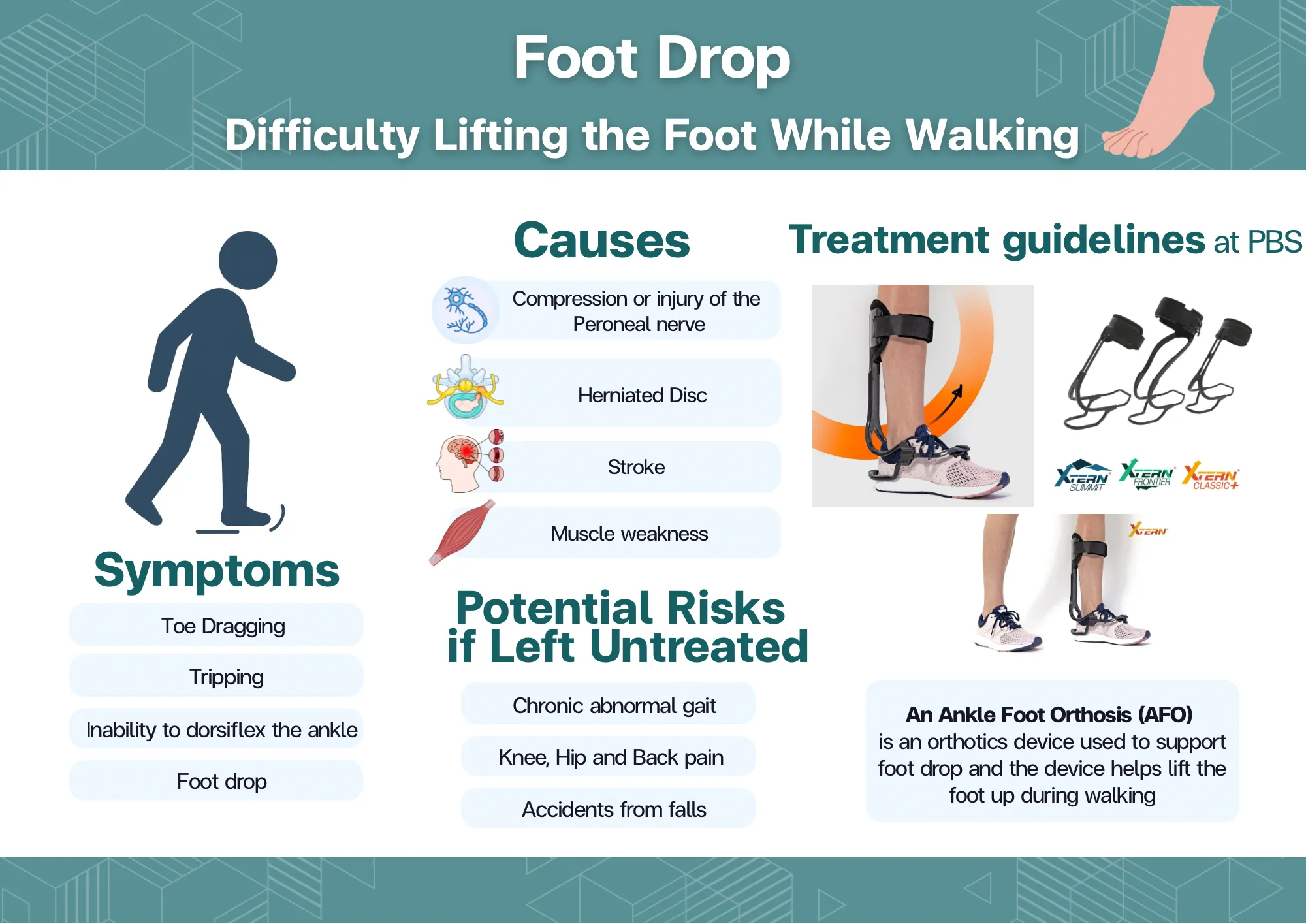


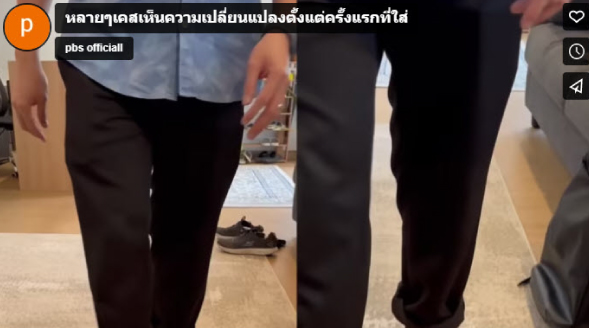
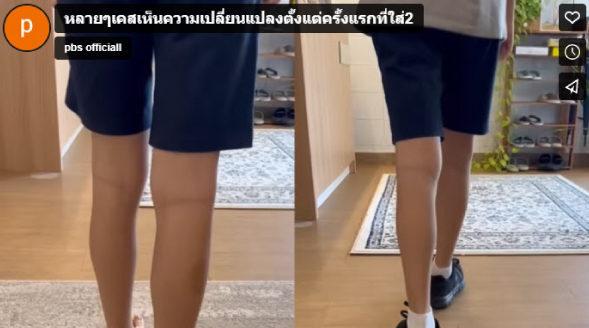
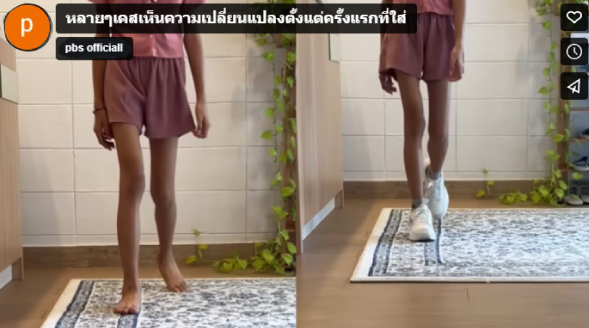
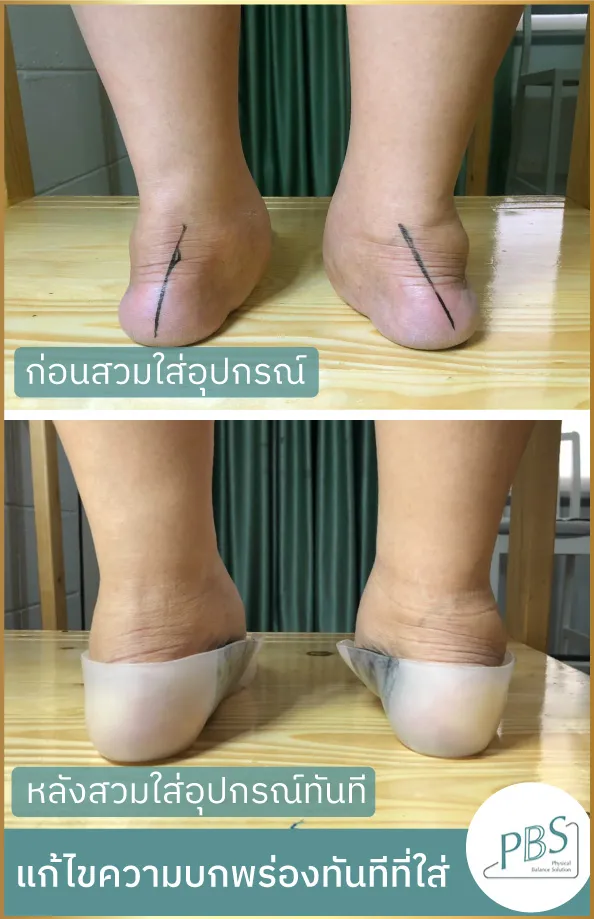
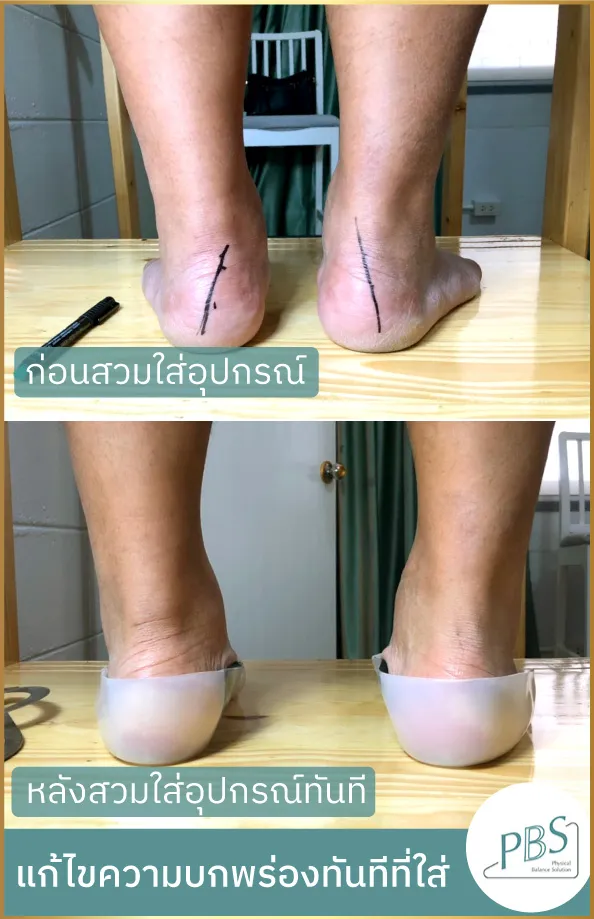
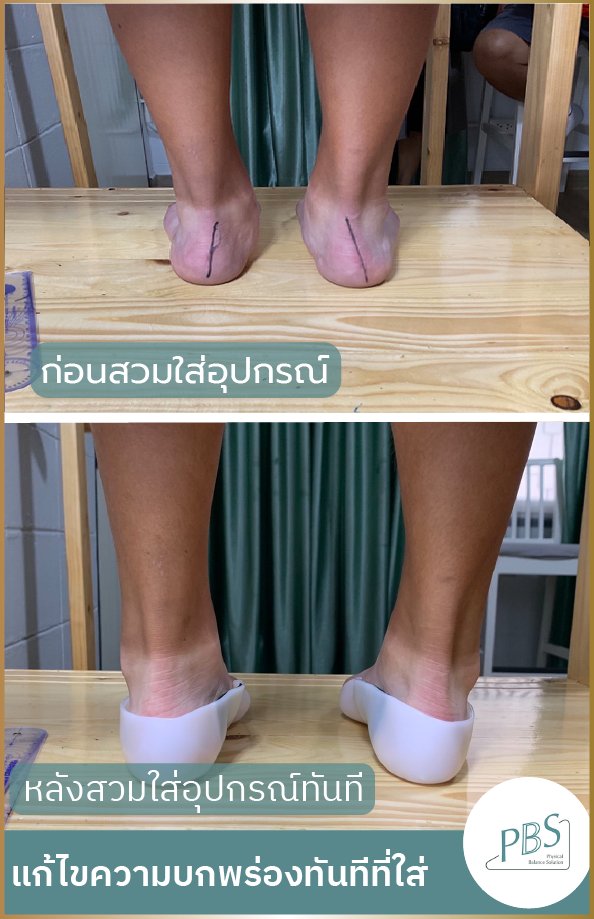
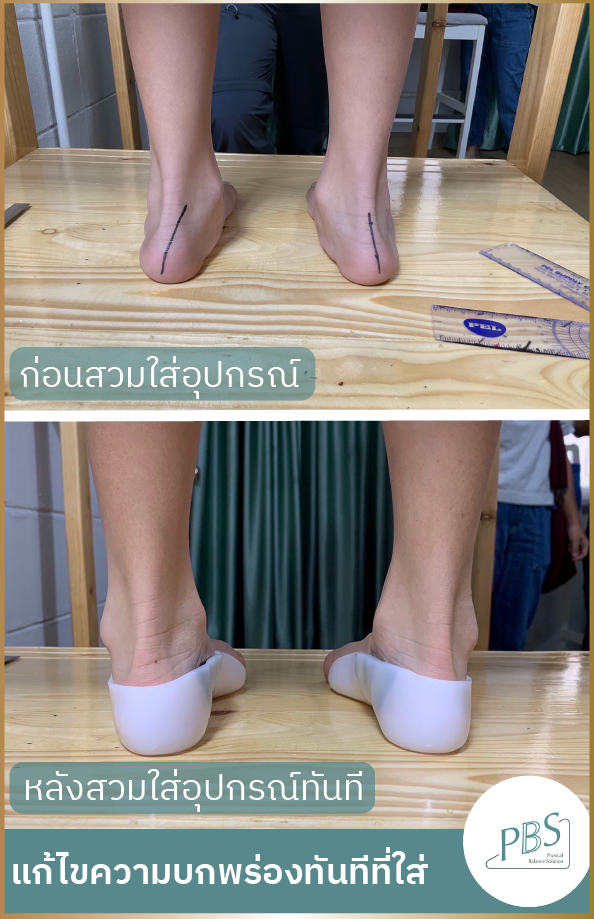
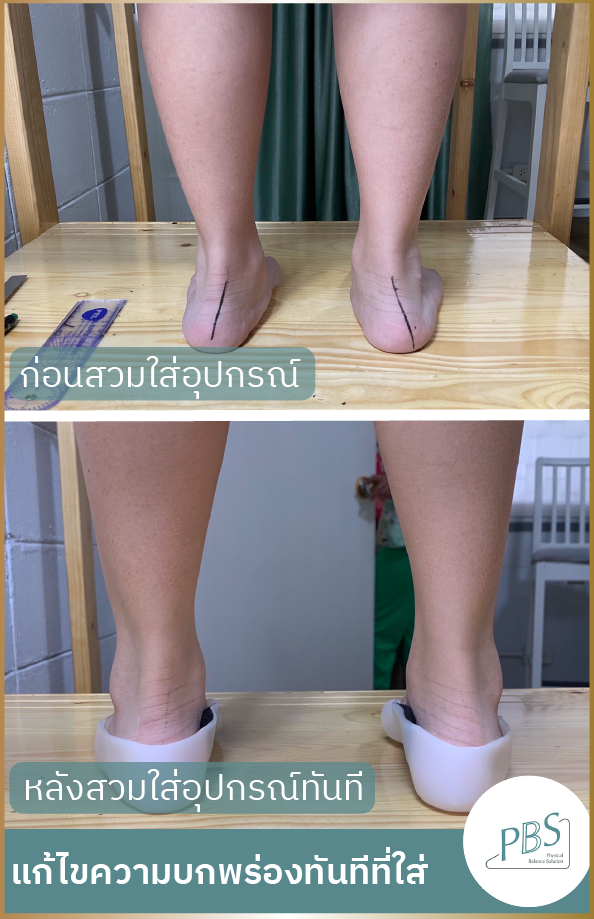
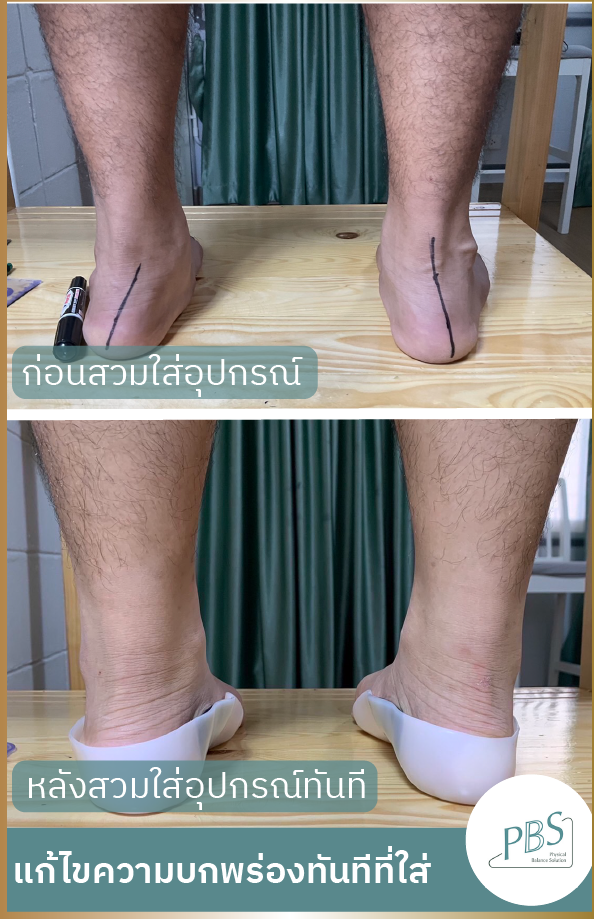
Immediate results after wearing.
PBS insoles can provide noticeable benefits from the very first time you wear them. They help support your feet in a more natural alignment, improve weight distribution, and promote a more stable, balanced walking posture immediately.
For pain that has developed over a long period of time, however, the muscles and joints need time to readjust and regain proper balance. As your body adapts, discomfort typically decreases gradually. With consistent daily use, most people notice significant improvement within 3-4 weeks.
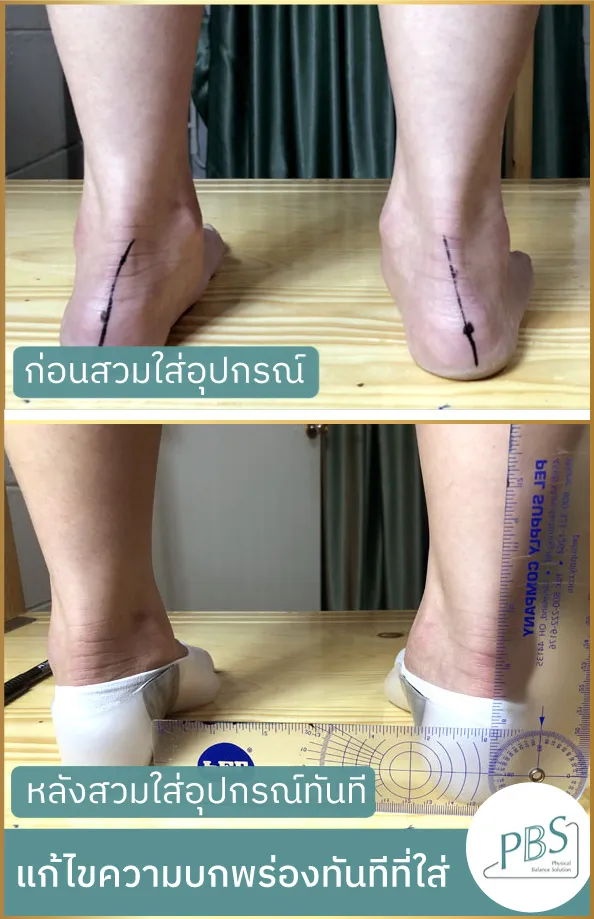


Results after continuous use.
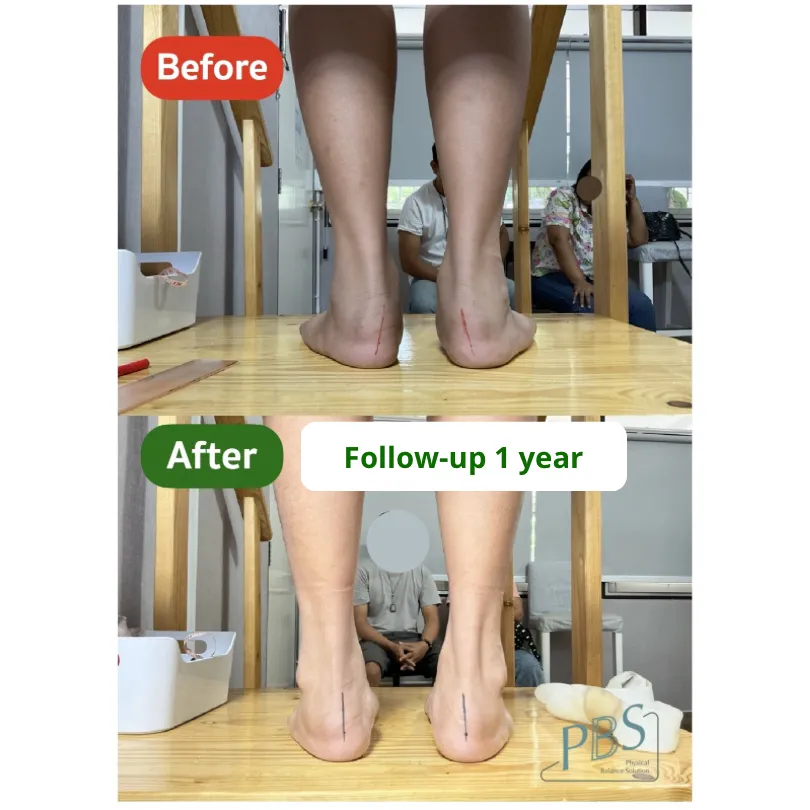
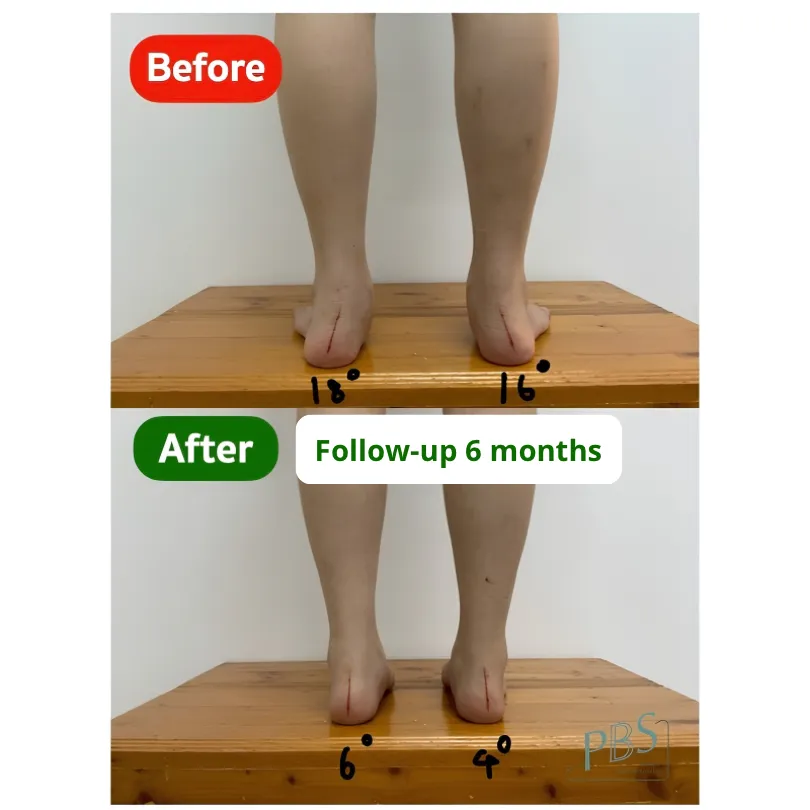
In children who begin treatment before skeletal maturity (approximately 17-20 years of age for boys and 14-15 years for girls), consistent use of PBS orthotic insoles may help support the natural development and gradual realignment of the foot structure. As the feet grow, alignment and weight distribution may improve, and flexible flat feet may improve significantly, return to a near-normal arch or even disappear. Early intervention may also help reduce the risk of long-term complications, including knee pain, back pain, and gait abnormalities.
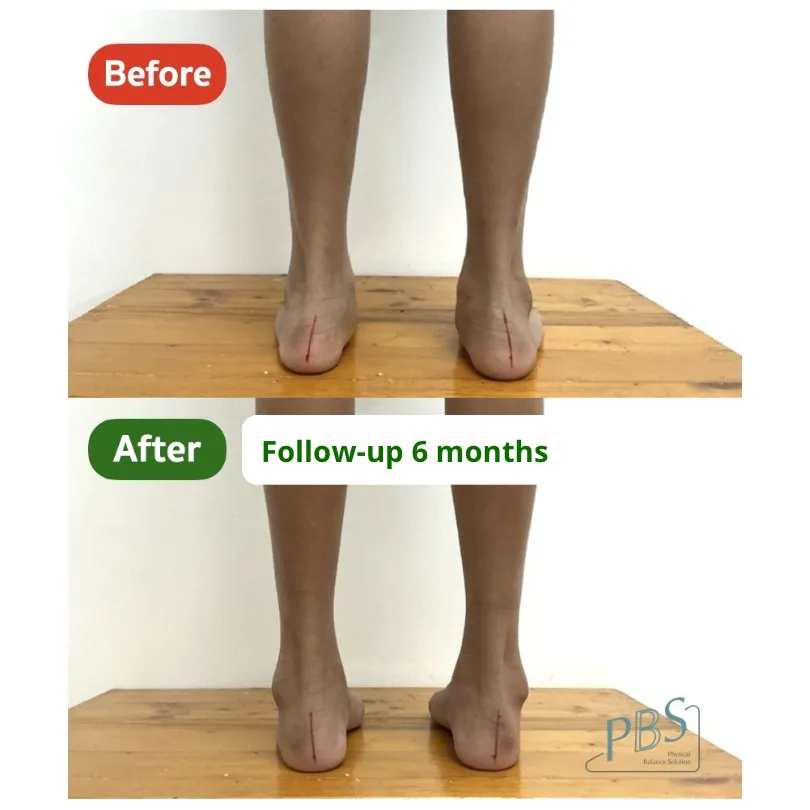
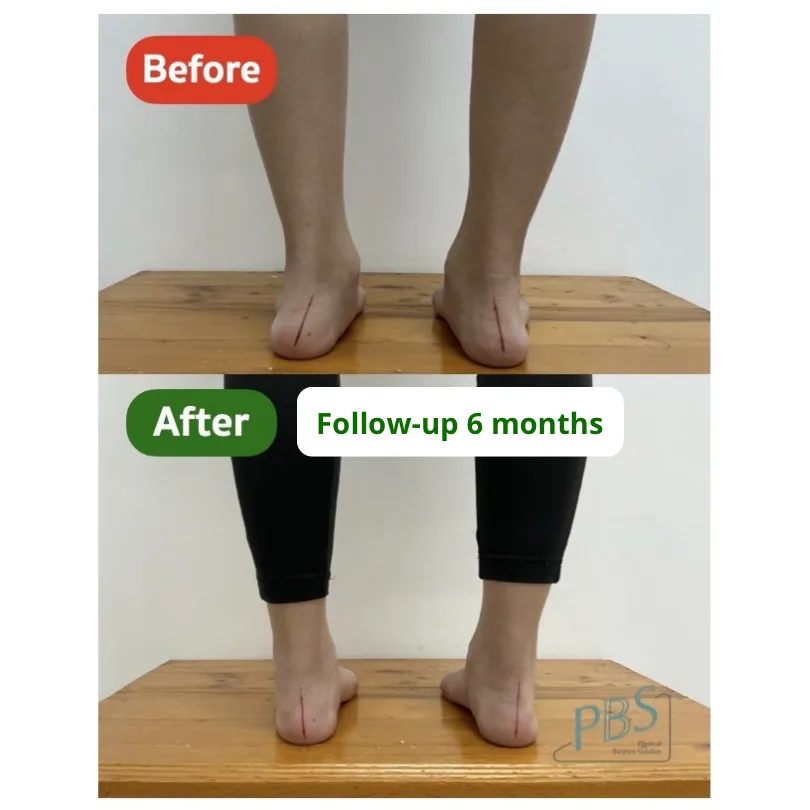
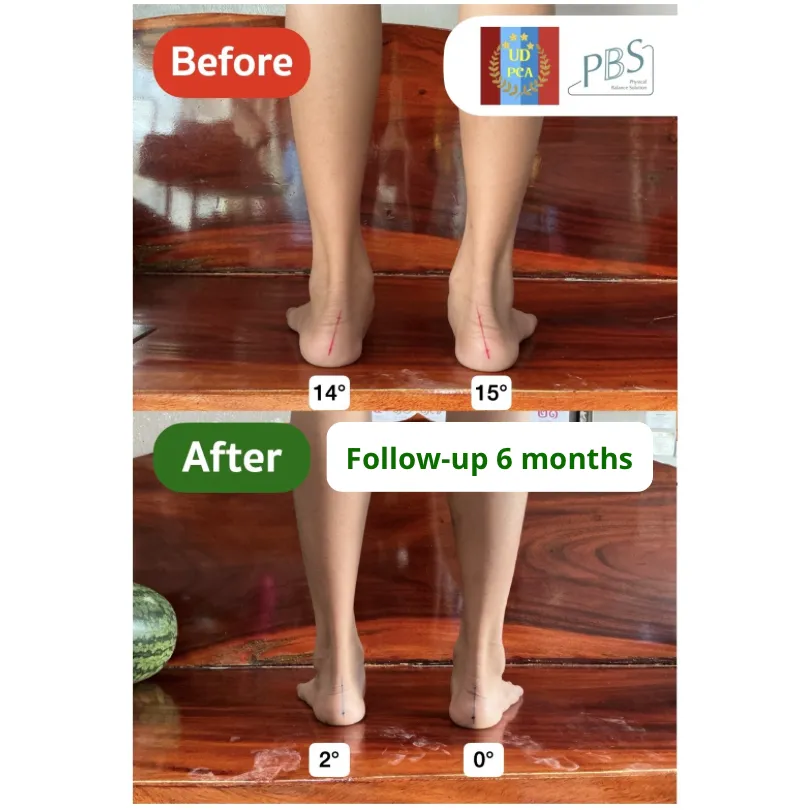
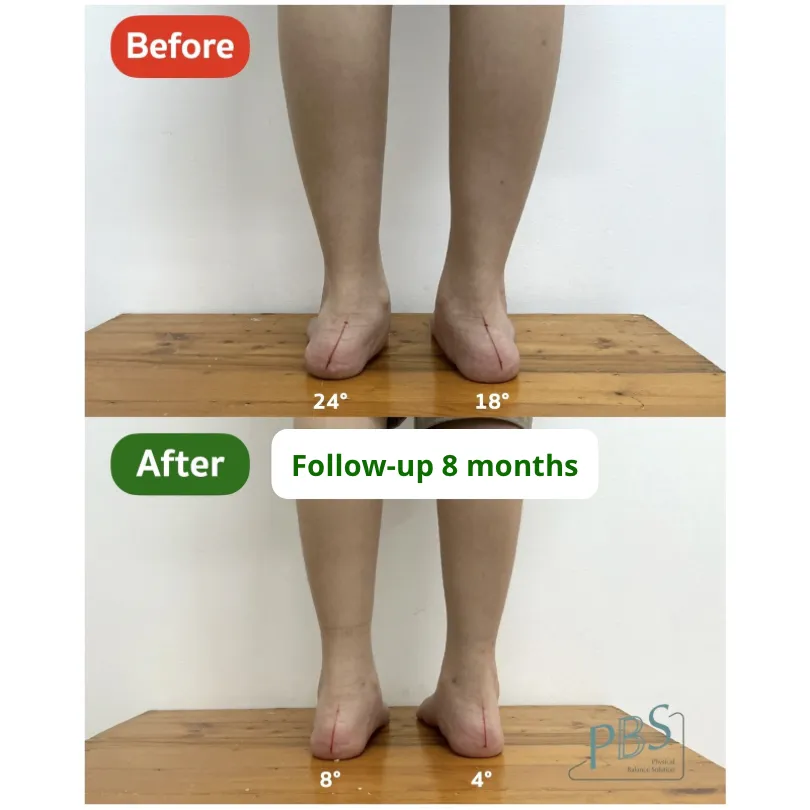
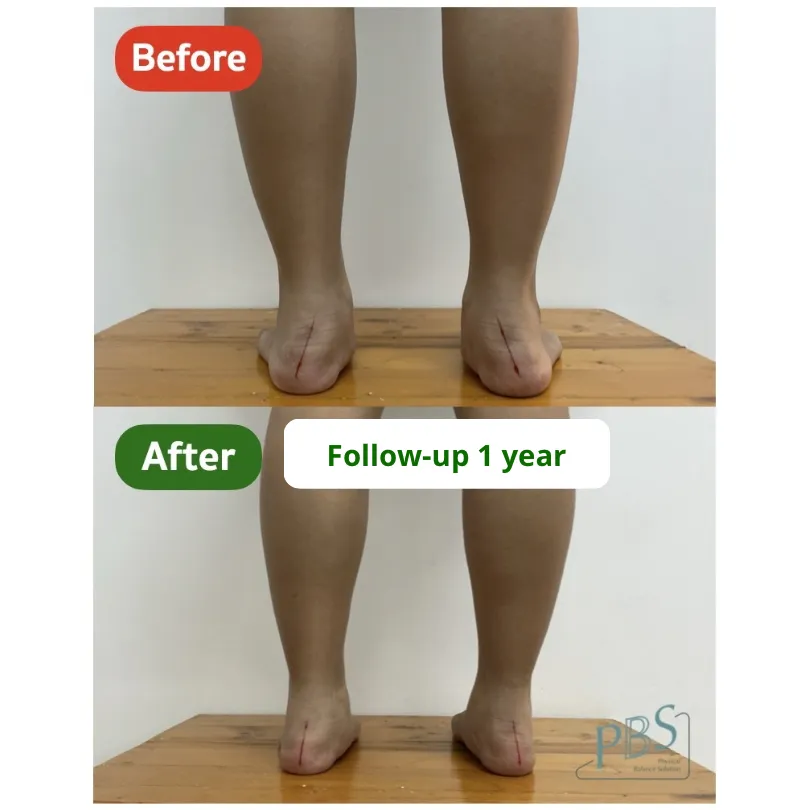
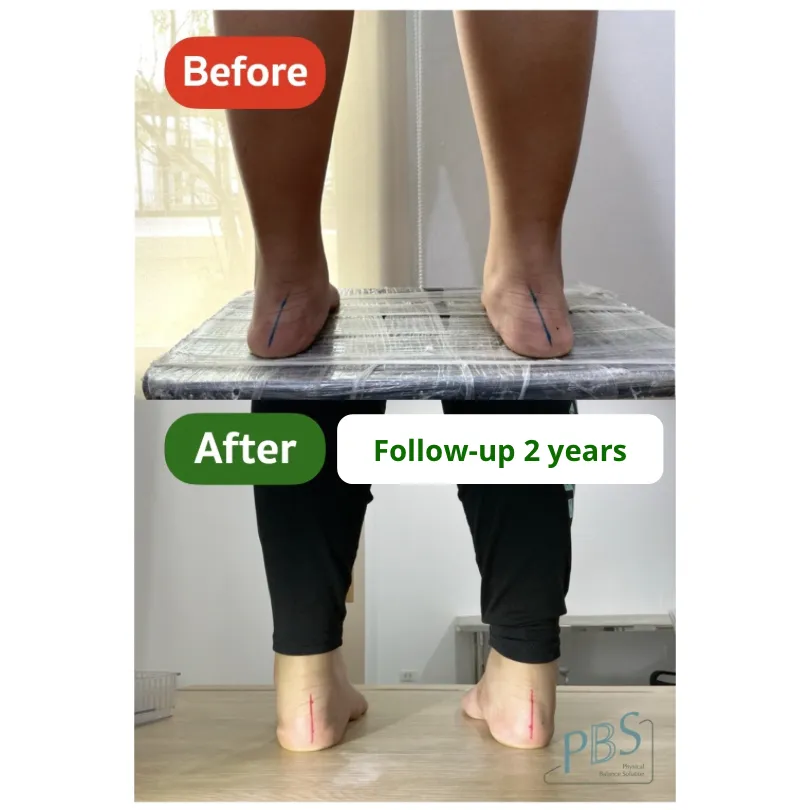
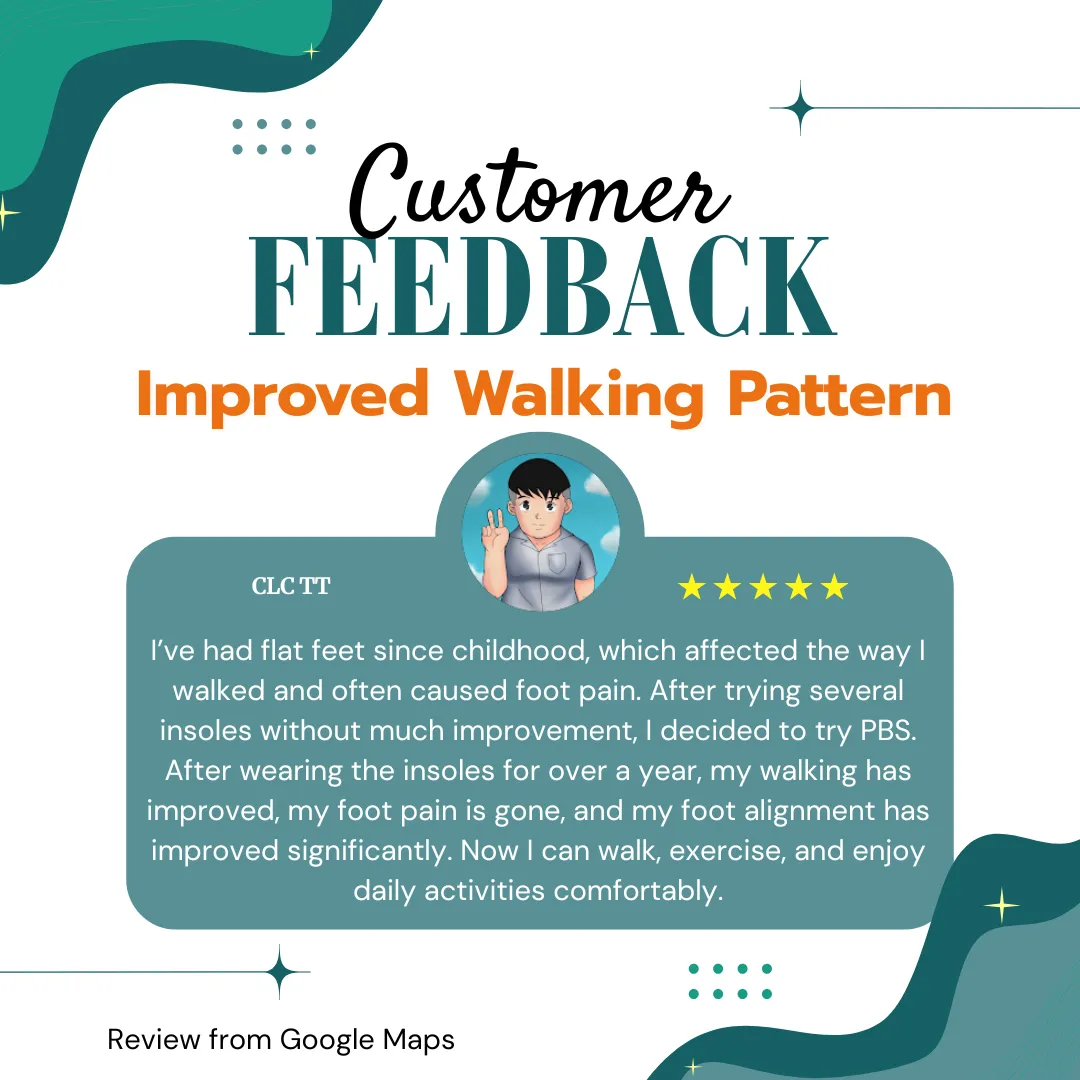
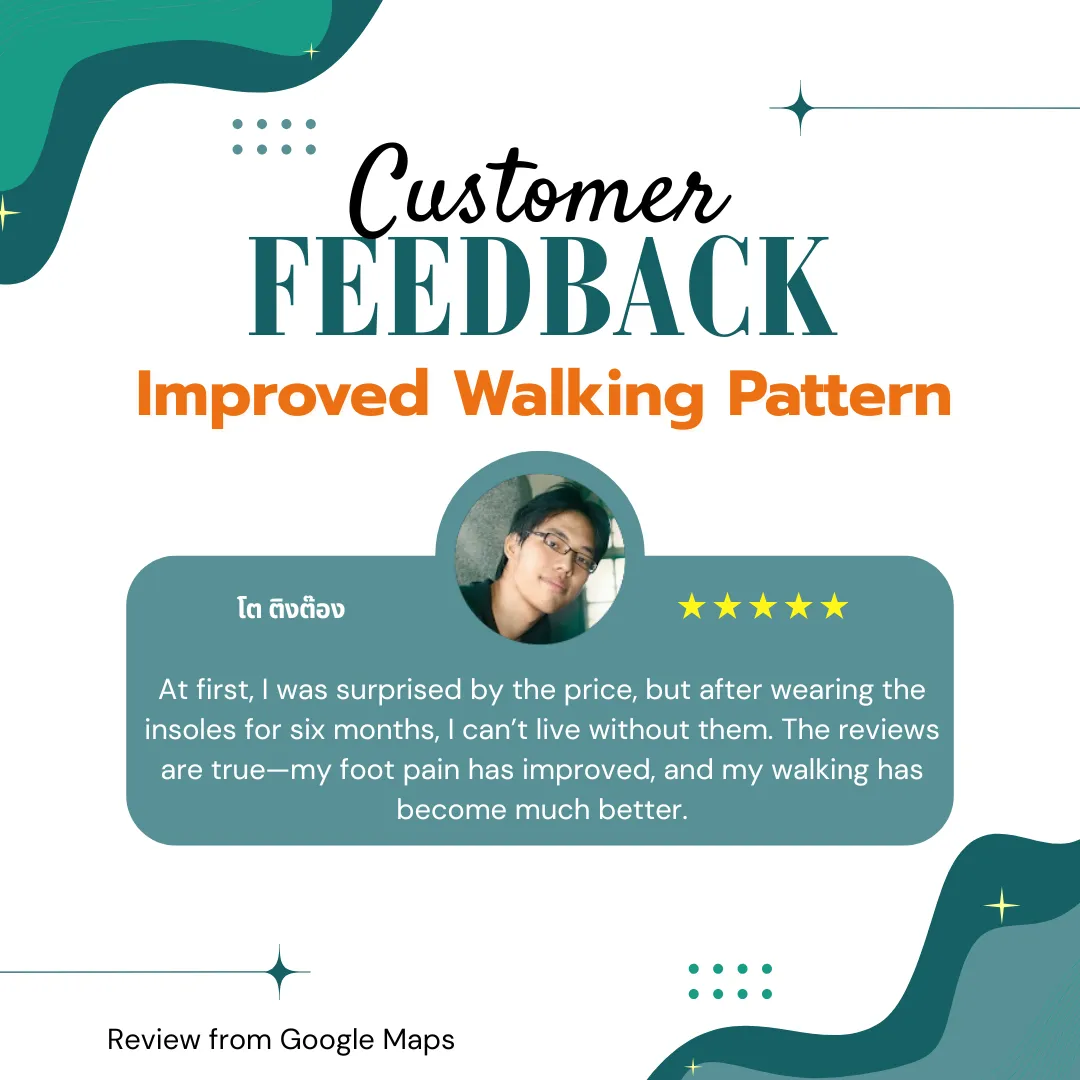
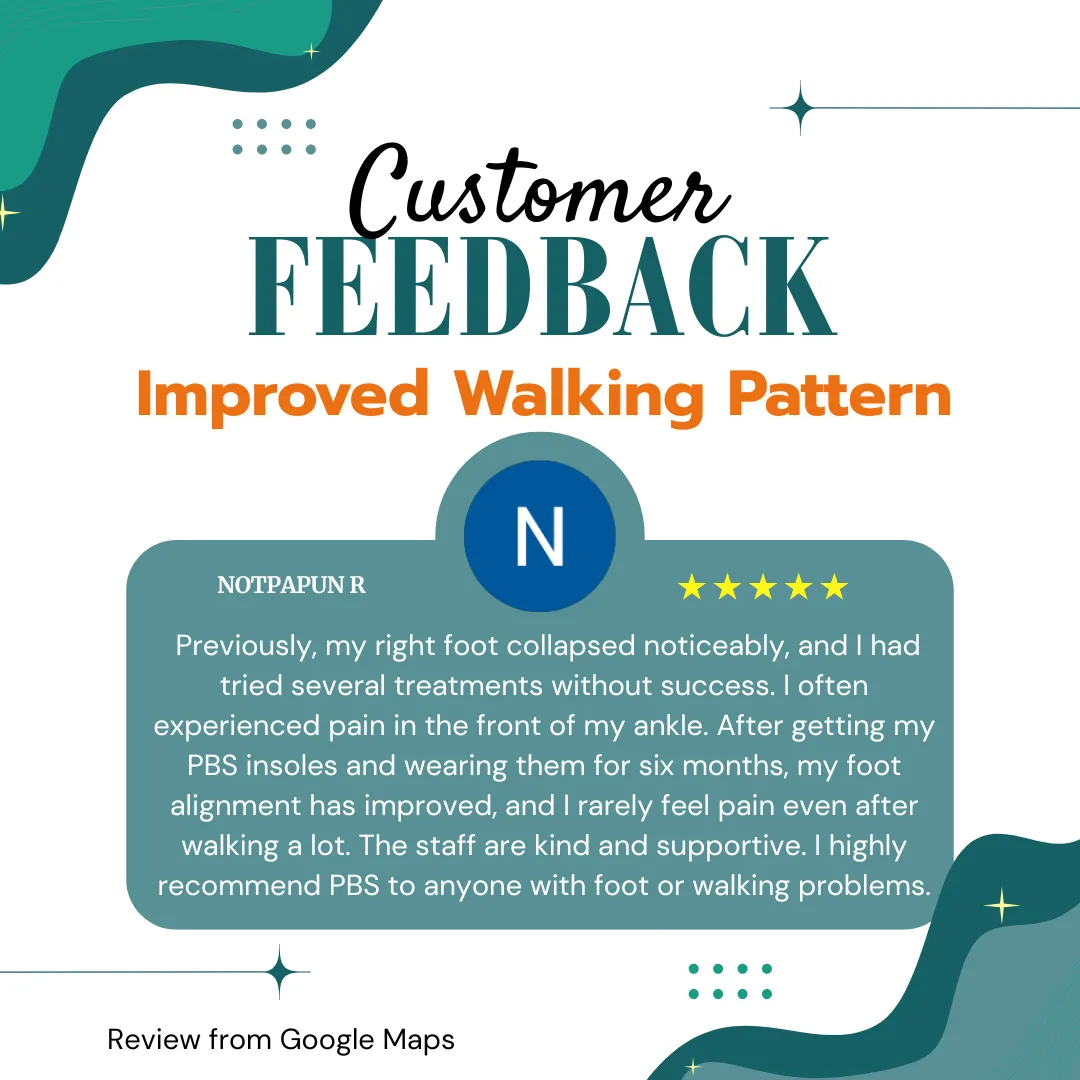
Gait improves.
Because people with flat feet often have problems such as out-toeing, a "duck-like" gait, or knock knees due to improper weight distribution. When the foot structure is corrected to a more normal and balanced alignment, the leg alignment and movement pattern are gradually realigned. As a result, these abnormal gait patterns improve over time, leading to a more natural and stable walking pattern.