






Table of Contents
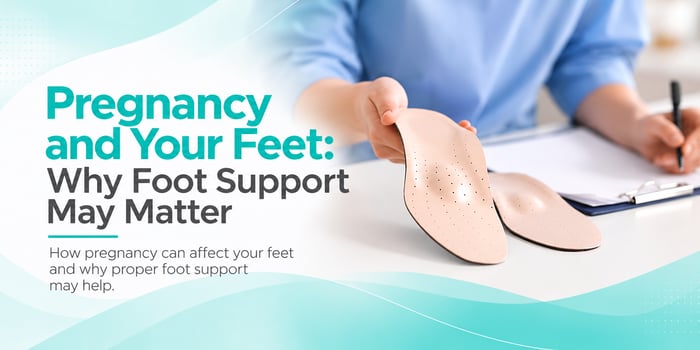
Pregnancy brings significant changes throughout the body, and the feet are no exception. As pregnancy progresses, changes in body weight, soft tissues, fluid retention, and biomechanics can alter the way the feet bear and distribute load.
Research has found measurable changes in foot shape during pregnancy, including increases in foot length and width and changes in arch height and foot posture. Pregnant women may also develop a more pronated foot position as pregnancy progresses. These changes can continue for a period after delivery in some women.
For some women, these changes are simply part of a normal pregnancy. For others, they may contribute to discomfort, fatigue, or difficulty with walking and prolonged standing.
When Your Feet Have to Carry More
As pregnancy progresses, the feet must accommodate changes in body mass and load distribution. Studies have found changes in plantar pressure and loading patterns during pregnancy, including greater loading toward the hindfoot and changes in the forces applied throughout the foot during walking.
These changes may be associated with symptoms such as:
- Foot or heel discomfort
- Leg fatigue
- Swelling of the feet and ankles
- Difficulty standing or walking for prolonged periods
- Changes in shoe fit
- Increased discomfort in the lower back or lower limbs
However, pregnancy-related foot changes do not affect everyone in the same way. The presence of a flatter arch or increased pronation alone does not necessarily mean that treatment is required.
What If You Already Have Flat Feet?
Women who already have flat feet or excessive pronation may notice greater changes in foot posture during pregnancy. As the arch and foot position change, the way forces are distributed through the foot and lower limb may also change.
A clinical assessment can help determine whether the changes are simply part of normal pregnancy or whether they are contributing to pain, instability, or altered movement.
Can Foot Orthoses Help?
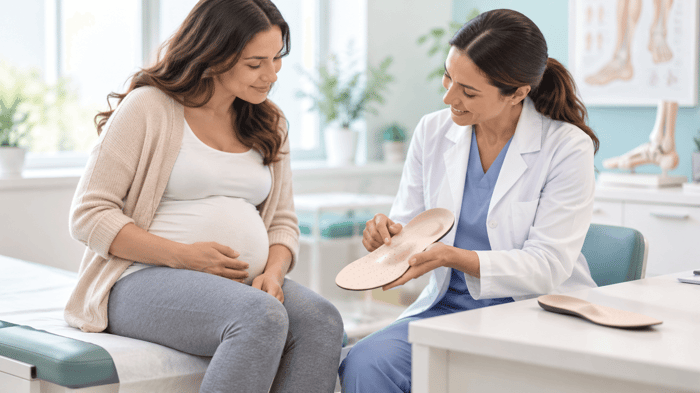
When foot pain or biomechanical problems are present, custom-made foot orthoses may be considered as part of conservative management. An appropriately designed orthosis can provide support beneath the foot, modify plantar loading, and help optimize foot mechanics during standing and walking.
Evidence for foot orthoses specifically during pregnancy is limited, however, research in other populations with excessive foot pronation has found that custom foot orthoses can influence foot mechanics and, in selected patients, may reduce musculoskeletal symptoms.
When Should You Consider an Assessment?
If you develop persistent foot or heel pain, significant discomfort while walking or standing, recurrent ankle instability, or difficulty performing your usual activities during pregnancy, consider seeking professional assessment.
Your feet are adapting to a changing body. Understanding those changes early can help determine whether simple footwear adjustments, exercise, rehabilitation, or custom-made orthotic support may be appropriate for you.
If you continue to experience persistent foot pain despite trying all natural treatment methods, consult a specialist promptly. At PBS, our team of foot care specialists provides services including custom orthotic insoles for plantar fasciitis and corrective devices for foot alignment. These solutions are personalized to treat the root cause and deliver the best possible outcomes.
Facebook: PBSofficial.TH
Line Official: @pbs.official
Source: