






Table of Contents
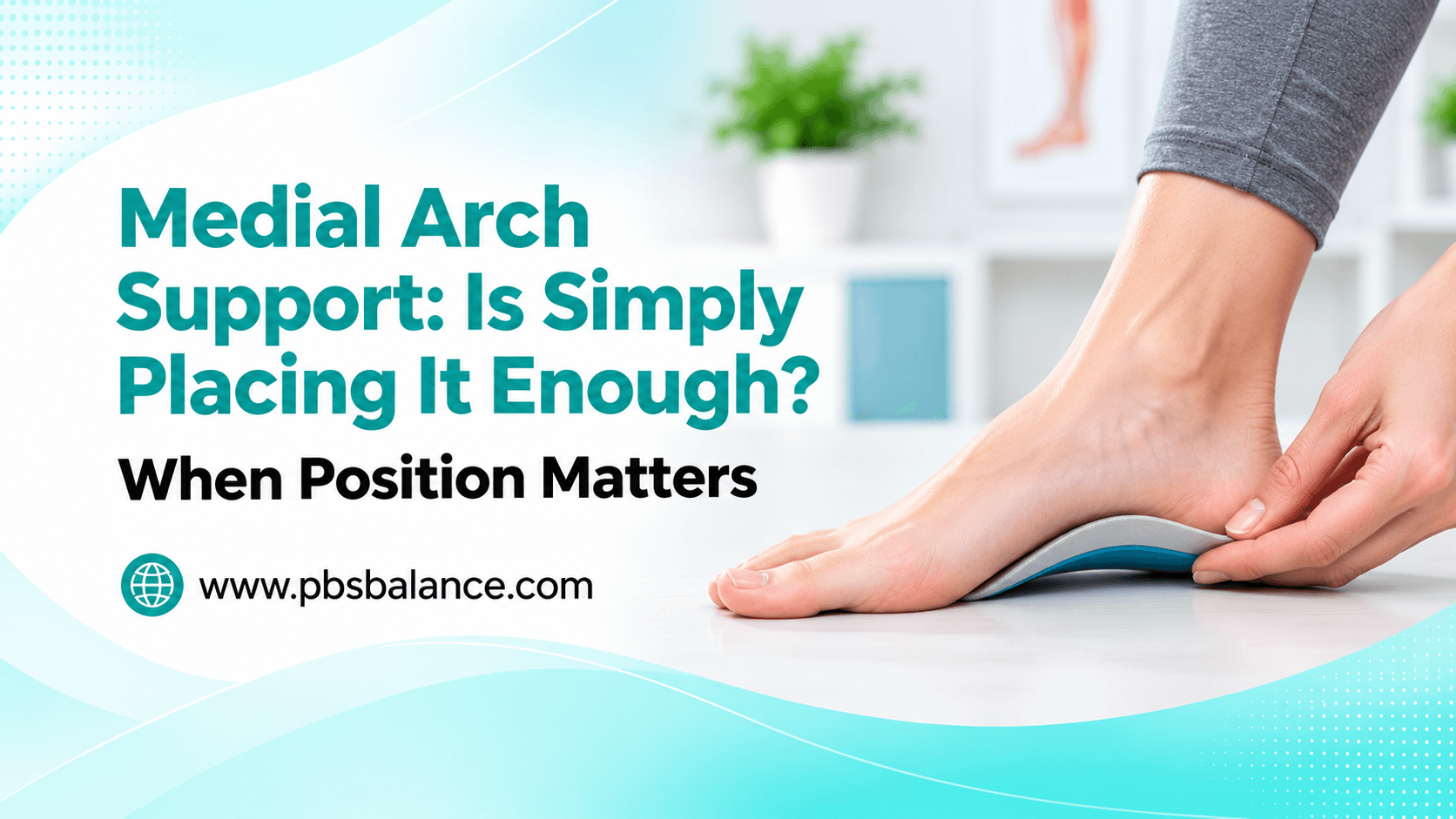
If you have flat feet or notice your feet rolling inward when standing or walking, one of the first solutions you may come across is a medial arch support or insole.
But are all arch supports designed to do the same thing?
The difference is not simply about price or convenience. It is about where the support is placed, how much support is provided, and whether it matches the structure and function of your foot.
Off Shelf Medial Arch Support: Simple and Easy to Try
An off shelf medial arch support is designed to provide additional support beneath the inner arch of the foot. It can be attached or placed inside a shoe and is generally easy to purchase and try.
For someone who simply wants additional arch support and does not have a complex foot problem, this may be a practical option.
However, feet are not one-size-fits-all.
Two people may both be described as having flat feet, yet have very different arch heights, heel positions, flexibility, joint alignment, and weight-bearing patterns. As a result, the location and amount of support that feels appropriate may also differ.
The Detail That Is Easy to Miss: Where the Support Goes
An arch support is not necessarily better simply because it is higher or firmer.
The position, shape, and stiffness of an orthotic component can influence how pressure is distributed beneath the foot. Different designs may produce different biomechanical responses, which is why the goal should not simply be to “push the arch up.”
For people with flatfoot, the foot’s mechanics involve more than the height of the medial arch. Heel position, forefoot alignment, foot flexibility, and the way the foot moves under load can all be relevant.
Recent research has found that foot orthoses can alter aspects of lower-limb joint mechanics in adults with flexible flat feet, although the effects vary according to the orthotic design.
This is why simply placing an arch pad in the shoe may not address every type of flatfoot.
So, What Makes a Custom Foot Orthosis Different?
A custom foot orthosis is designed based on an assessment of the individual’s foot structure, symptoms, movement, and functional requirements.
Instead of asking only, “How high should the arch be?”, the orthotist can consider:
- Where the foot is receiving excessive pressure
- How the heel is positioned
- How flexible or rigid the foot is
- How the foot moves during weight-bearing
- What type of footwear the person uses
- What activities the person needs to perform
The objective is not only to place the foot into one “perfect” position, but to determine what type and level of support is appropriate for that individual.
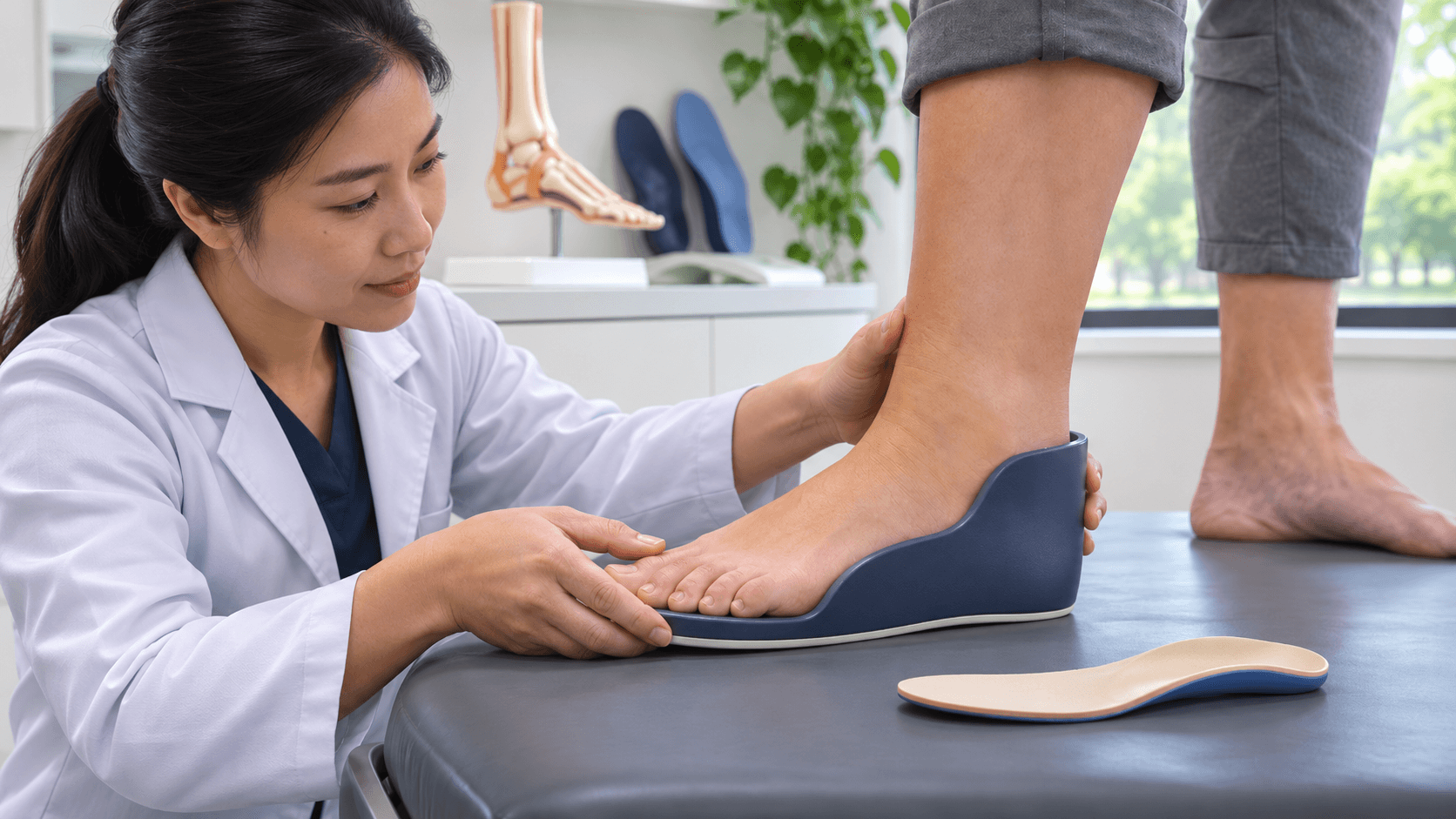
For some people with flexible flatfoot or more pronounced foot deformity, simple arch support may not provide enough control. This is where a more structured device such as a rigid foot orthosis may be considered.
Unlike a simple arch pad, a rigid foot orthosis is designed with relatively high walls around the heel and midfoot. Its purpose is not simply to make the arch higher, but to provide greater control and stability of the foot within the orthosis.
Which One Is Right for You?
A simple medial arch support may be sufficient if you are looking for basic support and do not have significant symptoms or structural problems.
A professional assessment may be more appropriate if you have:
- Pronounced or symptomatic flat feet
- A visibly collapsing or unstable foot
- Pain during standing or walking
- Difficulty tolerating standard arch supports
- Recurrent foot or ankle problems
- A foot deformity that requires greater control
The key question is therefore not simply:
“How much arch support do I need?” but: “Where does my foot need support, and what does that support need to achieve?”
Because “fits in your shoe” does not always mean “fits your foot.”
At PBS, we believe that orthotic treatment should begin with assessment rather than simply choosing the highest or firmest arch support available.
The goal is not to force every flat foot into the same position, but to provide the right support, in the right place, for the right reason.
If you continue to experience persistent foot pain despite trying all natural treatment methods, consult a specialist promptly. At PBS, our team of foot care specialists provides services including custom orthotic insoles for plantar fasciitis and corrective devices for foot alignment. These solutions are personalized to treat the root cause and deliver the best possible outcomes.
Facebook: PBSofficial.TH
Line Official: @pbs.official
Source: