




Table of Contents
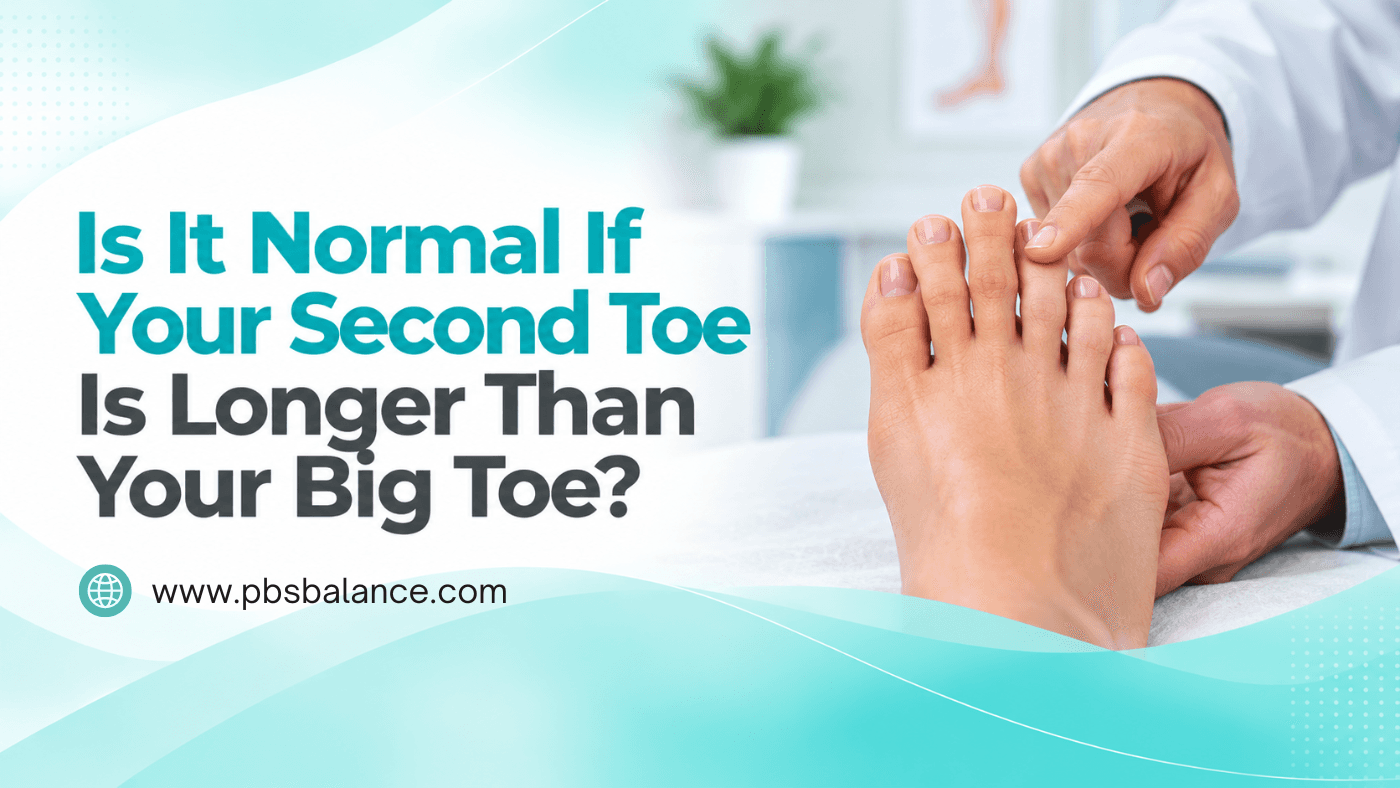
Have you noticed that your second toe is longer than your big toe? You may have what is commonly called Morton’s toe—a foot shape in which the second toe appears longer than the big toe. This is a relatively common anatomical variation and, by itself, does not necessarily indicate a foot disorder or require treatment.
What matters is how the shape of the foot affects pressure distribution, footwear fit, comfort, and movement. In some people, a relatively longer second metatarsal is associated with greater loading beneath the second metatarsophalangeal joint during walking. However, having a longer second toe does not automatically mean that pain or other foot problems will develop.
When Can It Become Uncomfortable?
The shape of the forefoot can become more noticeable when shoes do not provide enough length or space for the toes. Shoes that are too short or narrow may place additional pressure on the front of the foot and toes, potentially contributing to discomfort, calluses, or other forefoot problems.
Some people with a longer second toe also experience forefoot pain (metatarsalgia) or pressure beneath the second metatarsal head. However, these symptoms can have many causes, so the presence of a longer second toe alone does not establish the cause of pain.
Does a Longer Second Toe Affect the Way You Walk?
The forefoot plays an important role in absorbing and transferring load during walking. Differences in metatarsal length can influence how pressure is distributed across the forefoot. Research has found that people with relatively longer second metatarsals may experience greater loading beneath the second metatarsophalangeal joint during walking.
However, this does not mean that a longer second toe will automatically cause an abnormal gait, flatfoot, knee pain, or back pain. These conditions have multiple potential causes and should be assessed individually.

Start With the Right Assessment
If you have no pain or functional limitations, a longer second toe generally does not require treatment. The simplest first step is choosing shoes with sufficient length and a wide enough toe box so that the toes are not compressed.
If you experience persistent forefoot pain, calluses, difficulty finding comfortable shoes, or discomfort during walking or exercise, a professional assessment can help determine whether your toe and foot structure is contributing to the problem.
An assessment may include examination of foot posture, toe and joint alignment, weight distribution, plantar pressure, footwear, and walking mechanics.
Can Custom Foot Orthoses Help?
When symptoms are associated with altered pressure distribution or other mechanical problems, custom foot orthoses may be considered as part of conservative treatment.
Appropriately designed orthoses can help modify plantar loading and provide support according to the individual’s foot structure. Evidence suggests that custom-made foot orthoses can reduce forefoot pain in selected conditions such as metatarsalgia, although outcomes vary depending on the underlying diagnosis and orthotic design.
Importantly, an orthosis does not make a naturally longer second toe shorter. Instead, its purpose is to optimize load distribution and support the foot according to the individual’s biomechanics.
When Should You Seek an Assessment?
A second toe that is longer than the big toe is usually nothing to worry about. However, if it is accompanied by persistent forefoot pain, calluses, difficulty wearing shoes, numbness, or discomfort during walking and exercise, a professional assessment can help identify the underlying cause and determine whether treatment is necessary.
If you continue to experience persistent foot pain despite trying all natural treatment methods, consult a specialist promptly. At PBS, our team of foot care specialists provides services including custom orthotic insoles for plantar fasciitis and corrective devices for foot alignment. These solutions are personalized to treat the root cause and deliver the best possible outcomes.
Facebook: PBSofficial.TH
Line Official: @pbs.official
Source: